Silver Vark (Chandi Ka Warq) on Diwali Mithai: Is It Vegetarian, Is It Safe, and What Does FSSAI Say?
That shiny layer on barfi and kaju katli is a real food ingredient with a complicated story. Here is what vark is, what the rules say, and what to ask before you buy.
5 November 2026 · Updated 8 November 2026 · 4 min read
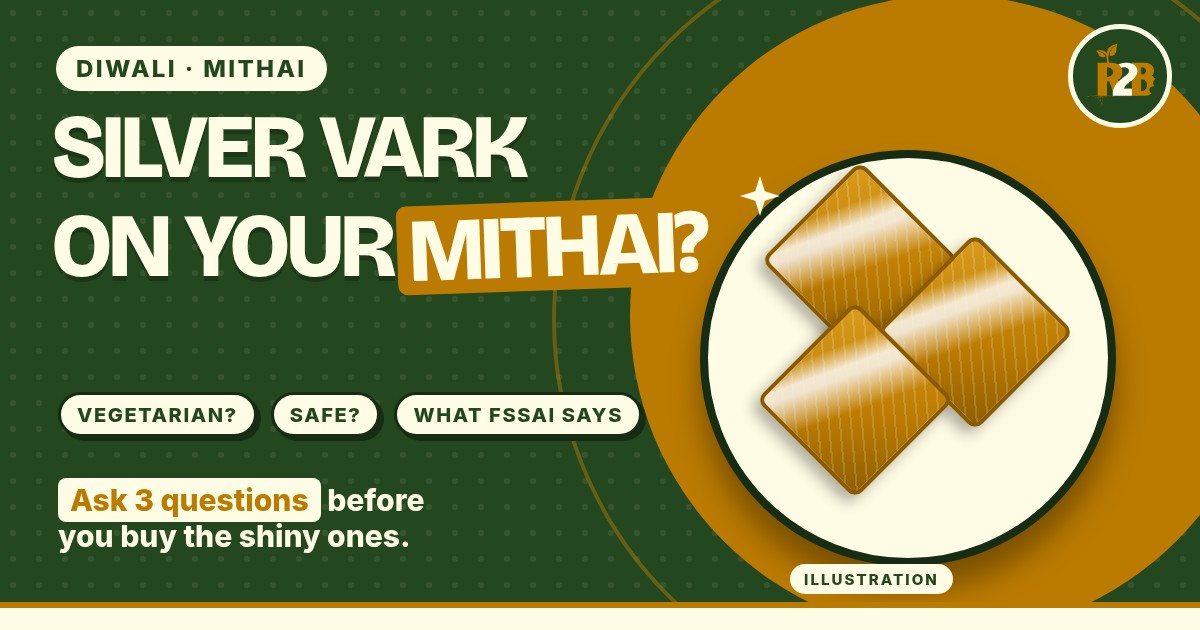
Look at a tray of kaju katli, barfi or paan at a Diwali sweet shop and you will see a thin, shimmering layer on top. That is vark, also called chandi ka warq, edible silver leaf. It looks beautiful. It also raises three questions that people keep asking: is it vegetarian, is it safe, and is it real silver?
This guide explains what vark is, what FSSAI’s rules say, why the legal picture is not as clear as it sounds, and what you can actually do at the shop.
What is vark?
Vark is silver beaten into an extremely thin sheet, so thin that it tears at a touch and dissolves into the sweet. It has been used to decorate mithai, paan and festive dishes in India for a very long time. It is meant to be eaten with the sweet, and it adds almost no taste.
Is silver vark vegetarian?
This is the question behind the headlines. Traditionally, vark was made by placing small pieces of silver between sheets of material and hammering them. Reports say that, in the traditional method, the silver was beaten between layers of animal intestine, which is why many vegetarians were uncomfortable with it.
FSSAI addressed this in a 2016 amendment to its standards for silver leaf. As reported, the amendment says silver leaf must not be made using any animal-origin material at any stage, and sets a date in 2017 after which this was to apply. Many makers say they now use other materials, but you cannot tell from the look of the vark.
Why the legal picture is unclear
Reports say the amendment was challenged by traditional artisans, who argued that their process leaves no animal material in the final silver leaf, and that the Delhi High Court stayed the regulation. We could not confirm from the reports we found whether that stay is still in force or what the later position is. That is why we do not claim that “vark is now always vegetarian”. Instead, treat it as a question to ask the seller.
Is silver vark safe to eat?
Pure, food-grade silver leaf has long been used as a decoration. The bigger concern in news coverage is substitution: aluminium foil being sold or used in place of silver on sweets, because silver is expensive. FSSAI’s standard, as reported, requires silver of at least 999/1000 purity and sets thickness and quality norms for the leaf.
We are not saying any particular shop does this. We are explaining why FSSAI has a standard, and why it is reasonable to ask where the vark comes from. Home tests you may see online, such as rubbing the foil between your fingers, are not reliable proof. A lab test is the only real way to know.
| Question | What to know |
|---|---|
| What is it? | Silver beaten into an ultra-thin, edible sheet used to decorate sweets. |
| Is it vegetarian? | FSSAI’s 2016 standard, as reported, bars animal-origin material in making silver leaf, but the rule’s legal status is unclear. Ask the seller. |
| Is it safe? | Pure food-grade silver leaf is a traditional decoration. The concern is substitution with aluminium. FSSAI’s standard requires at least 999/1000 silver. |
| Can I test it at home? | Not reliably. Buy from licensed, identifiable sellers instead. |
Three questions to ask before you buy
- “Is the vark real silver, and where does it come from?” A shop that buys from a known supplier can usually answer.
- “Is it made without animal-origin material?” If this matters to you, ask directly. You do not have to take a shiny sweet on trust.
- “Can I have it without vark?” Many shops will serve plain pieces, and you can also scrape the vark off. That is the simplest choice if you are unsure or prefer to avoid it.
For packaged sweets and gift boxes
Packaged mithai should carry a full label: ingredients, the FSSAI licence number, dates and manufacturer details, and the vegetarian or non-vegetarian mark. Read it. See how to read a food label, how to check an FSSAI licence number and best before, use by and expiry explained. For the bigger festive picture, see what the FSSAI festive crackdown means and how to buy safer. For bright colours on sweets, see synthetic colours in Diwali sweets.
What this guide cannot tell you
- Whether the vark on a particular sweet is pure silver. Only a laboratory can say.
- How the vark was made. The look of it does not show.
- What the current legal position is. Check the latest FSSAI notifications and court records.
At Root to Bite we try to separate what a seller says, what has been checked, and what is still unknown. For vark, a lot is still unknown, and asking a few questions is the most practical step.
Rules and court orders change. For the current official position, see FSSAI’s notifications below. General information only, not medical or legal advice.
Frequently asked questions
Is silver vark (the silver foil on sweets) vegetarian?
It depends on how it was made. Traditionally, silver was beaten between layers of animal intestine. FSSAI’s 2016 standard, as reported, bars animal-origin material in making silver leaf, but reports say the rule was stayed by the Delhi High Court and its current status is unclear. If it matters to you, ask the seller or choose sweets without vark.
What is the silver on kaju katli?
It is vark, also called chandi ka warq: real silver beaten into an extremely thin, edible sheet and laid on sweets such as kaju katli and barfi. It is meant to be eaten with the sweet and adds almost no taste.
What is chandi ka warq?
Chandi ka warq is edible silver leaf: silver beaten into an extremely thin sheet and used to decorate Indian sweets such as barfi and kaju katli, as well as paan and festive dishes.
Is it safe to eat silver vark (silver foil on sweets)?
Pure, food-grade silver leaf is a traditional decoration. The concern in news coverage is aluminium foil being used instead of silver. FSSAI’s standard, as reported, requires silver of at least 999/1000 purity. Buy from licensed, identifiable sellers and ask where the vark comes from.
How can I tell if vark is real silver?
You cannot tell reliably by looking, and home tests are not dependable. Only a lab test can confirm purity. The practical step is to buy from licensed sellers and ask about the source.
Can I remove the vark from a sweet?
Yes. Many people scrape the vark off or ask for pieces without it. That is the simplest option if you are unsure or prefer to avoid it.
What does FSSAI say about silver leaf?
FSSAI’s 2016 amendment, as reported, sets standards for silver leaf, including at least 999/1000 purity, thickness norms, and a bar on animal-origin material. Reports say the amendment was challenged and stayed in court, so check FSSAI’s notifications for the current position.
Sources
- Deccan Herald: HC stays Centre’s regulation on silver leaf
- FSSAI: Gazette notification on silver leaf (19 July 2016)
- Wikipedia: Vark
- FSSAI: Food Safety and Standards Authority of India
General information only, not medical or legal advice. The graphic is an illustration. No brand or sweet shop sponsored or reviewed this article.