FSSAI’s Diwali Crackdown: 3,280 Tonnes Seized, 52 Licences Cancelled. What the Numbers Mean for Your Mithai
On Diwali morning the headline is huge: about 3,280 tonnes seized. Here is what has been reported, what it does and does not mean, and what to check before you buy mithai.
8 November 2026 · 3 min read
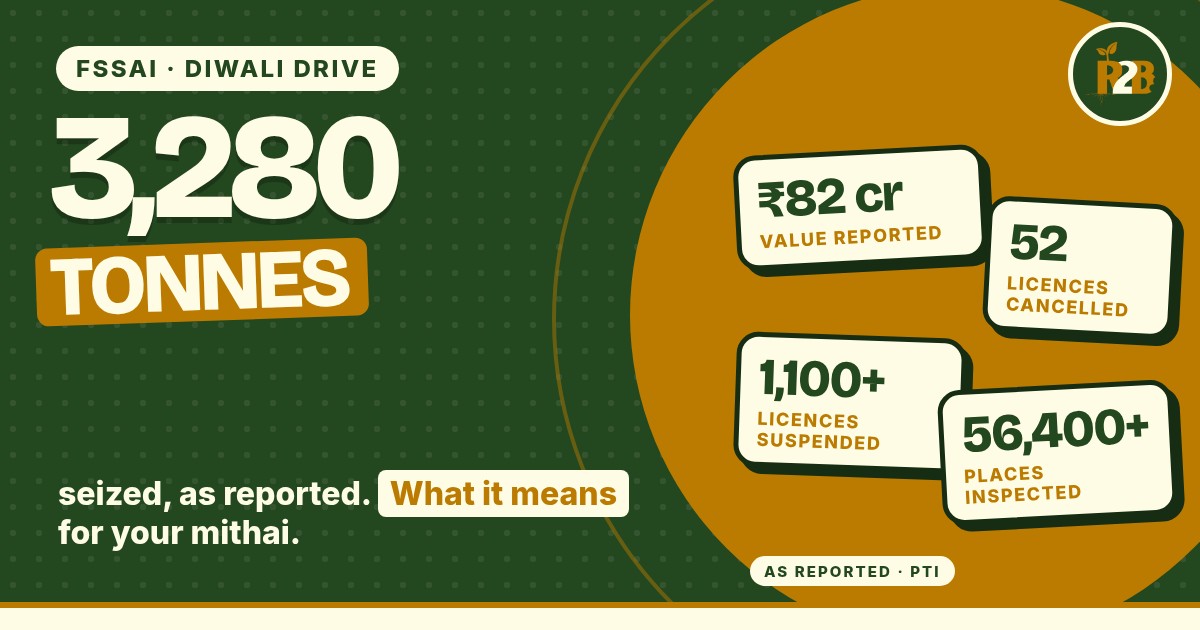
It is Diwali morning, and the headline is enormous: FSSAI’s festive-season drive has reportedly seized nearly 3,280 tonnes of banned and non-compliant food, worth around ₹82 crore. Paneer, ghee, milk and sweets are named. Before you reach for the mithai box, here is what those numbers say, and what they do not.
The figures below come from a PTI report carried by Business Today on 8 November 2026. We are summarising news reports, not FSSAI’s own release, and numbers can be revised.
The numbers, as reported
| What | As reported |
|---|---|
| Food seized | Nearly 3,280 tonnes of banned and non-compliant food products |
| Value | Around ₹82 crore |
| Products named | Paneer, ghee, milk and sweets |
| Licences cancelled | 52 |
| Licences suspended | More than 1,100 (one headline says 1,185) |
| Establishments sealed | More than 300 |
| Improvement notices | Over 10,000 |
| Establishments inspected | More than 56,400 |
| Drive started | 1 September (no end date given) |
What the numbers do tell you
- Inspections are happening at scale. More than 56,400 establishments were reportedly inspected, and thousands of notices were issued.
- Action goes beyond seizures. Licences were cancelled and suspended and premises sealed, which means consequences for sellers, not just a warning.
- The festive season is when milk-based foods get the most attention, because demand spikes and the products are perishable and valuable.
What the numbers do not tell you
A big number invites big conclusions. These are the limits worth keeping in mind:
- “Non-compliant” is not the same as “unsafe”. The report says “banned and non-compliant” but does not break the 3,280 tonnes down. Non-compliance can cover many things, such as labelling, hygiene, missing licences or quality standards, as well as adulteration.
- There is no split by product or state. The report says “across the country” and does not say how much was paneer, ghee, milk or sweets.
- It is a running total, not a Diwali-day figure. The drive reportedly began on 1 September, so the numbers cover weeks, not a single day.
- Test results and outcomes are still to come. Seizures are often followed by laboratory tests and legal steps, and we do not yet know how many seized items were later confirmed as violations.
- It does not tell you which shop or brand is fine. Named actions against particular companies were reported separately, and we do not know whether they are included in the national totals. We name none of them here.
Is it good news or bad news?
Both, honestly. It is good that inspections are being done and that action is followed through. It also shows how much non-compliant food can reach the market. India has a very large number of food businesses, so inspections can only cover part of them, which is why buying habits still matter.
What to do today, before you buy mithai
- Check the FSSAI number on the pack or on display, and verify it on FoSCoS: how to check an FSSAI licence number.
- Check the dates, and ask when loose sweets were made: best before, use by and expiry, explained.
- Look at the colour. Local food-safety teams, for example in Chandigarh, have said non-permitted colours in sweets are strictly prohibited: synthetic colours in Diwali sweets.
- Buy milk sweets in small amounts and keep them cool. See fake mawa, khoya, paneer and ghee: how to buy safer.
- Ask about the vark: silver vark on mithai.
- If something smells or tastes wrong, stop, keep the pack and the receipt, and report it to your local food safety officer.
What to watch after Diwali
Look for the breakdown by product and state, the number of seized samples that failed laboratory tests, and the outcomes of the licence cancellations. Those will tell you far more than the headline total. We will update this post when more is reported.
At Root to Bite we try to separate what is claimed, what has been checked, and what is still unknown. A headline number is a claim about enforcement. The breakdown behind it is where the facts are.
Figures are as reported by PTI and news outlets, and may change. This is general information, not legal or medical advice.
Frequently asked questions
How much food did FSSAI seize in the Diwali drive?
Reports citing PTI say FSSAI’s festive-season drive seized nearly 3,280 tonnes of banned and non-compliant food worth around ₹82 crore, including paneer, ghee, milk and sweets. The drive reportedly began on 1 September, so it is a running total, and the figures may be revised.
How many licences did FSSAI cancel or suspend?
As reported, 52 food business licences were cancelled and more than 1,100 were suspended (one headline says 1,185), with more than 300 establishments sealed and over 10,000 improvement notices issued.
Does “non-compliant” mean the food was adulterated or unsafe?
Not necessarily. The reports say “banned and non-compliant” but do not break it down. Non-compliance can include labelling, hygiene, licence or quality-standard violations as well as adulteration.
Are Diwali sweets safe to buy this year?
Many are, but you cannot tell from the box alone. Buy from licensed, identifiable sellers, check the FSSAI number and dates, look out for unnaturally bright colours, buy milk sweets in small amounts, and ask when loose sweets were made.
Where do I report adulterated or unsafe food?
Keep the product and the receipt, tell the seller, and report it to your local food safety officer or through FSSAI’s consumer complaint channels on the FSSAI website. Some states set up temporary helplines during the festive season.
When does the FSSAI festive drive end?
The report says it began on 1 September and does not give an end date. Other reports suggest enforcement continues through the festive season, including Chhath Puja. Check FSSAI’s announcements for the latest.
Sources
- Business Today (PTI): FSSAI seizes 3,280 tonnes of paneer, ghee, milk and sweets worth ₹82 crore
- National Herald: FSSAI seizes 3,280 tonnes of adulterated, non-compliant food
- The Tribune: Food Safety Administration steps up checks in Chandigarh
- Newslaundry: How safe are the sweets you bring home for Diwali?
- FSSAI: Food Safety and Standards Authority of India
General information only, not medical or legal advice. This article summarises news reports; figures are as reported and may change. No brand, shop or official sponsored or reviewed it.