Fake Mawa, Khoya, Paneer and Ghee Before Diwali: What the FSSAI Crackdown Means and How to Buy Safer
FSSAI has ordered a festive crackdown and reports of suspected adulterated khoya and paneer are everywhere. Here is what it means for your Diwali shopping, and what actually helps.
3 November 2026 · Updated 8 November 2026 · 4 min read
Every year, a few days before Diwali, the same headlines return: suspected adulterated khoya, paneer and ghee seized. This year is no different. If you are about to order mithai, gift boxes or the ingredients for sweets at home, it is fair to ask what is going on, and what you can actually do about it.
This guide explains the FSSAI festive crackdown in plain language, why mawa, khoya, paneer and ghee are the products people worry about, which home checks are only rough screens, and the buying habits that really help.
What is happening this Diwali
- FSSAI has directed states and union territories to step up inspections and sampling for the Navratri and Diwali season, especially at hotspots. Reports say the focus products are milk and milk products, sweets, snacks and savouries, edible oils and ghee.
- Inspection data is being logged on FSSAI’s FoSCoS and FoSCoRIS systems, so results can be followed centrally.
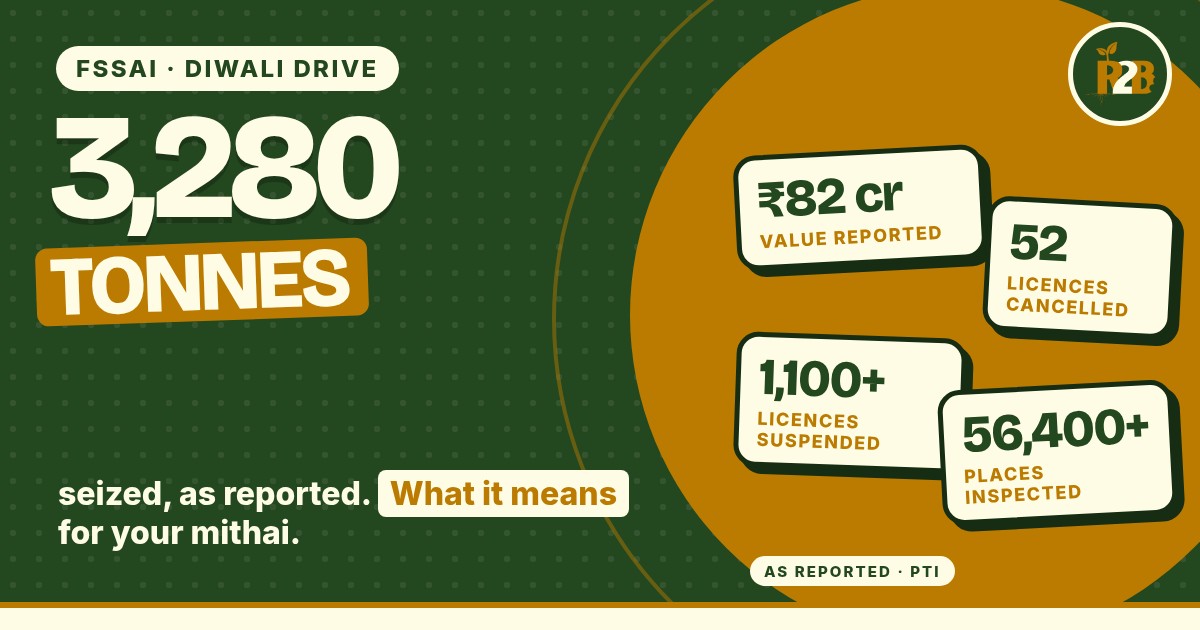
- Local authorities are reporting seizures. News reports from Delhi and nearby areas describe thousands of kilograms of suspected adulterated paneer and khoya, and large quantities of substandard ghee, taken out of the market before Diwali. Figures differ between reports.
Two cautions. “Suspected” matters: a seizure is not the same as a confirmed test result. And a crackdown shows that checks are happening, not that every shop or every box has been tested.
Why mawa, khoya, paneer and ghee?
These are valuable, perishable, milk-based products in very high demand for a few days a year. That combination is what tempts some sellers to stretch them with cheaper material. Reports about festival-season adulteration of milk products mention things like starch, skim milk powder and, in some coverage, other fillers. We are not saying any particular shop or brand does this. We are explaining why these products are the ones inspectors watch most closely.
Home checks: useful, but only rough screens
You will see many “fake khoya test” videos. Treat them as a rough first look, not a verdict, because a clean result does not prove a product is pure, and there is no single home test built for khoya.
| Quick check | What it is meant to show | How far to trust it |
|---|---|---|
| Smell and texture | Real khoya is usually grainy and smells of milk or ghee. A very pasty, rubbery or odourless sample is a reason to be careful. | Rough. Different khoya types look different. |
| Iodine test for starch | Boil a small sample in water, let it cool, then add a drop or two of iodine solution. A blue-black colour suggests starch has been added. | Only checks for starch, nothing else. |
| Price | A price far below the going rate for ghee, paneer or khoya is a reason to ask questions. | A warning sign, not proof. |
If something smells off, tastes odd or makes you feel unwell, stop using it, keep the pack and the receipt, and report it (see below).
What really helps when you buy
- Buy from a shop or brand you can identify, and check the FSSAI licence or registration number. See how to check an FSSAI licence number.
- Check the dates. For packaged sweets and boxes, look for the packing date and the best before or use by date. See best before, use by and expiry, explained. For loose sweets, ask when they were made.
- Prefer small quantities of milk sweets, bought close to when you need them. They are the most perishable.
- Look at the whole label on packaged ghee and paneer: ingredients, FSSAI number, packing date, quantity, price and manufacturer details. See how to read a food label.
- Be careful with “pure” and “desi” on the front of the pack. They are claims, not tests. See what food claims really mean.
- If you can, ask for the lab report, and read it with care: it only speaks for the sample tested. See what a food lab report can and cannot tell you.
If you think you were sold something unsafe
Keep the product, the pack and the receipt. Tell the seller first, then report it to your local food safety officer or through FSSAI’s consumer complaint channels, which you can find on the FSSAI website. During the festive drive, some states have set up temporary helplines, so check your state’s food safety department for a number. For the shiny layer on top of sweets, see silver vark on mithai: vegetarian, safe, and what FSSAI says. For bright colours, see synthetic colours in Diwali sweets: permitted vs banned dyes.
What this guide cannot tell you
We cannot tell you which shops or brands are safe, and home tests cannot replace laboratory testing. The only way to know a particular batch is fine is to have it tested. What you can do is lower your risk by buying from identifiable, licensed sellers, checking dates and labels, and asking questions. That is the idea behind Root to Bite: separating what a seller says, what has been checked, and what is still unknown.
Reports of seizures are from news coverage and may change as results come in; “suspected” means not yet confirmed. Home tests are rough screens, not proof. This is general information, not medical or legal advice.
Frequently asked questions
How can I check if khoya or mawa is fake at home?
Home checks are only rough screens. Real khoya is usually grainy and smells of milk or ghee, while very pasty, rubbery or odourless khoya is a reason for caution. An iodine test can suggest added starch (a blue-black colour). None of these prove purity, so buy from a licensed, identifiable seller and check the date.
Nakli mawa kaise pehchane? (How do I recognise fake mawa?)
Smell, texture and price give a first clue, and a simple iodine test can show added starch. But there is no single home test that proves mawa is pure. The safest approach is to buy from a shop or brand with an FSSAI licence number, ask when it was made, and avoid unusually cheap offers.
What is the FSSAI festive crackdown?
FSSAI has directed states and union territories to step up inspections and sampling during Navratri and Diwali, with a focus on milk products, sweets, snacks, edible oils and ghee. Inspection and sampling data is being logged on FSSAI’s online systems.
Are Diwali sweets safe to buy this year?
Many are, but you cannot tell from the box alone. Buy from licensed, identifiable sellers, check the FSSAI number and the dates, buy milk-based sweets in small quantities, and ask a shop when loose sweets were made.
Where do I report adulterated food?
Keep the product and the receipt, tell the seller, and report it to your local food safety officer or through FSSAI’s consumer complaint channels listed on the FSSAI website. Some states set up temporary helplines in the festive season.
Sources
- Oneindia: Delhi seizes suspected adulterated paneer and khoya ahead of Diwali
- Pragativadi: FSSAI directs nationwide festive crackdown on adulteration
- The Better India: How to check for fake mithai at home
- FSSAI: Food Safety and Standards Authority of India
General information only, not medical or legal advice. News figures are as reported and may change. No brand sponsored or reviewed this article.
- 8 November 2026: Update: reports citing PTI now put the national festive drive at nearly 3,280 tonnes of non-compliant food seized, worth about ₹82 crore. See FSSAI’s Diwali crackdown, explained.