“Cold Pressed” Oil: What the Words on the Bottle Do and Don’t Tell You
“Cold pressed” sounds clear, but it is a description of a method, not a guarantee. Here is what it usually means, and the questions that tell you more.
30 October 2026 · 3 min read
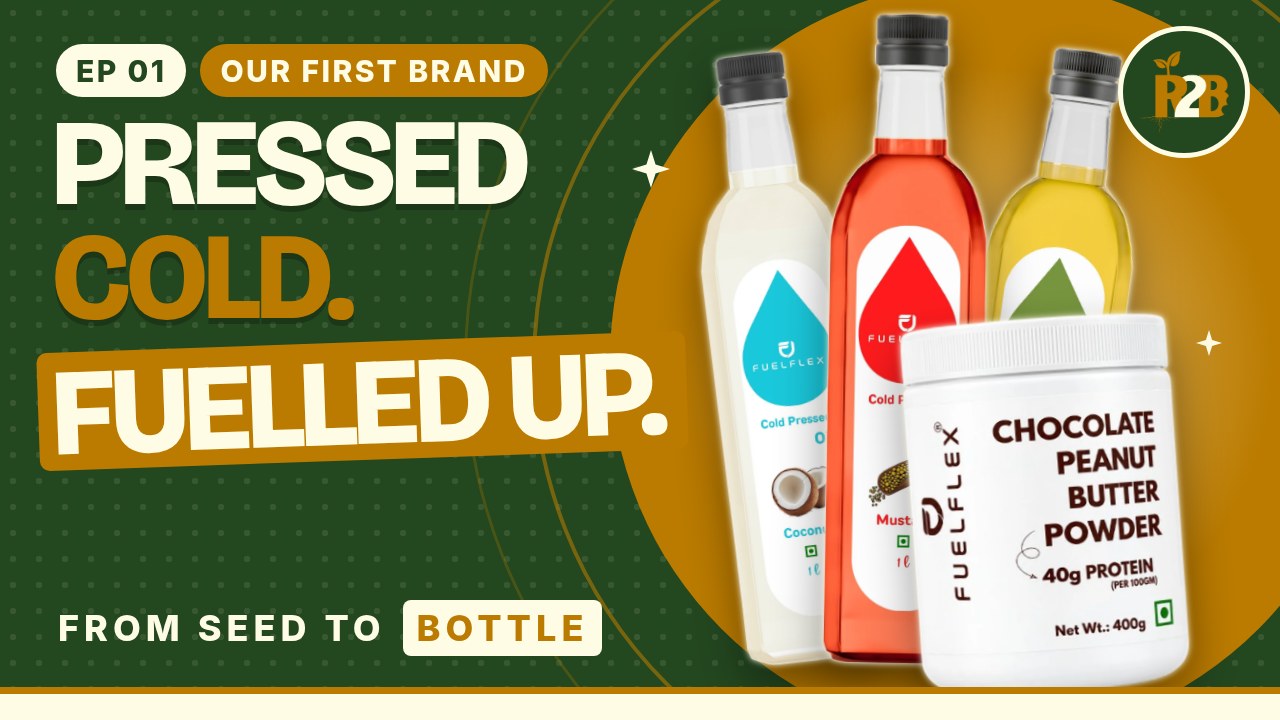
Walk down the oil aisle and the words multiply: cold pressed, kachi ghani, wood pressed, unrefined, chemical free. They all sound like good news. They are also a good example of how a label can describe a method without telling you what you really want to know.
We talked about this in our first podcast episode, FUELFLEX x R2B, where we followed a brand’s cold pressed oils from seed to bottle. This post is the plain-language version of the questions we kept coming back to.
What “cold pressed” usually means
In general use, a cold pressed oil is one that is squeezed out of seeds or nuts mechanically, with a press, and without added heat or chemical solvents. The idea is that gentle extraction keeps more of the seed’s natural flavour and colour. Oils made this way are often described as unrefined and tend to smell and taste more strongly of what they came from.
Two things to hold onto: it is a description of how the oil was pressed, and in everyday conversation it is not a precise measurement.
Is there an official definition?
As far as we could find, there is no single, general FSSAI definition of “cold pressed” that applies to every oil label, and we did not find “kachi ghani” defined either. Indian rules do cover edible oils (for example, standards for raw oils and a list of permitted claim statements for vegetable oils), and the general claims rules say a claim must be truthful and not misleading. If you need the exact wording for a specific oil, check the current FSSAI notifications. Because terms like these are not tightly defined, it is fair to ask a brand what it means by them.
Related words you will see
- Kachi ghani / wood pressed: traditional names for pressing oil in a slow, mechanical press. Like “cold pressed”, they describe a style of pressing.
- Unrefined: the oil has not gone through the extra refining steps used for many mass-market oils. It usually has a stronger taste and colour.
- Expeller pressed: pressed with a screw press. Depending on the machine and speed, this may or may not involve heat.
- Chemical free / solvent free: a claim that no solvent was used. It is worth asking how the brand can show this.
What the words do not tell you
- The temperature. “Cold” rarely comes with a number. Friction in a press can warm the oil, and brands rarely say how warm.
- Where the seeds came from, how they were stored, or how fresh they were.
- Whether a batch was tested for quality, contaminants or adulteration.
- Whether it is right for your cooking. Some unrefined oils have a lower smoke point and suit dressings or gentle cooking better than deep frying.
- Whether it is better for you. A method is not a health claim.
Five questions to ask before you buy
- What does the brand mean by “cold pressed”, and can it say how the oil is pressed?
- Where do the seeds or nuts come from, and are they a single source?
- Is there a batch or packing date, and a best-before date?
- Is the FSSAI number on the pack, and does it check out? See how to check an FSSAI licence number.
- What does the ingredient list say? A plain oil should list one ingredient.
How to store it
Unrefined oils are generally best kept in a cool, dark place, with the cap closed, and used within the date on the pack. Heat, light and air all shorten an oil’s life.
A label is a starting point for questions, not the end of them. We cover how to read the rest of the pack in our label guide and what front-of-pack wording can and cannot promise in what food claims really mean.
Rules and terms change, and we have summarised them in plain language. For current official requirements on edible oils and claims, see the FSSAI pages below. This is general information, not legal or medical advice.
Sources
- FSSAI: Advertising and Claims regulations, summary
- FSSAI: Labelling and Display regulations and amendments
General information only, not medical or legal advice. FuelFlex, the brand in our first podcast episode, is Root to Bite’s first partner brand; it did not review or pay for this article.