“High Protein” on Indian Food Labels: What the Claim Means and How Much Protein You Actually Need
“High protein” sells. Before you pay extra for it, here is what the claim is meant to mean, how to check it in 30 seconds, and what ICMR-NIN says you need.
2 November 2026 · 4 min read
Protein is the word of the moment. It is on biscuits, chips, cereals, ladoos, curd, peanut butter and even water. “High protein” on the front of a pack makes it feel like a healthier choice, and often a more expensive one.
So what does the claim actually mean in India, how can you check it yourself, and how much protein does a normal person need? This guide gives you the numbers in plain language. It is a companion to what food claims really mean.
What “high protein” and “source of protein” are meant to mean
In India, claims like these are covered by FSSAI’s Advertising and Claims Regulations. A claim is not supposed to be a free-for-all: a product has to contain a defined minimum amount of protein to use it. The compendium describes the thresholds as a share of the recommended daily intake (RDA), measured per 100 g for solids, per 100 ml for liquids, or per 100 kcal.
| Claim on the pack | Roughly what it is meant to mean |
|---|---|
| Source of protein | About 10% of the RDA for protein per 100 g of a solid food (or 5% per 100 ml of a liquid, or 5% per 100 kcal). |
| High protein / rich in protein | About 20% of the RDA for protein per 100 g of a solid food (or 10% per 100 ml of a liquid). |
Different websites summarise these thresholds differently, and the rules have been amended over the years, so treat those figures as a guide and check the current text on the FSSAI site if you need exact numbers. The useful point is that the claim is per 100 g, not per pack and not per bite.
The 30-second check on any pack
- Step 1: Find protein per 100 g in the nutrition table. Ignore “per serving” for now, because brands choose the serving size.
- Step 2: Compare it with similar foods. Plain dal, curd, paneer, eggs, soya and chickpeas are real protein foods. If a biscuit has less protein per 100 g than a bowl of dal, the front-of-pack word is doing a lot of work.
- Step 3: Check the serving size and do the sum for what you will really eat. A bar that is “10 g protein per serving” may be 2 servings, or a very small bar.
- Step 4: Look at the rest of the table. Sugar, salt, saturated fat and calories matter just as much as protein.
- Step 5: Read the ingredient list. Where does the protein come from: milk, soya, peanuts, pea, whey? Is it the first ingredient or a sprinkle near the end?
A worked example
Say a 30 g snack pack says “6 g protein” on the front. Per 100 g that is 6 ÷ 30 × 100 = 20 g of protein per 100 g, which is a genuinely protein-rich product. Now say a 50 g pack says “high protein” but the table shows 5 g per pack. That is 5 ÷ 50 × 100 = 10 g per 100 g, which is fine, but it is half as protein-dense as the first pack. Same word, very different products.
How much protein do you actually need?
India’s ICMR-NIN Dietary Guidelines (2024) put the recommended protein intake for a healthy adult at about 0.83 g per kg of body weight per day. For a 60 kg adult, that is roughly 50 g a day. People on mostly cereal-based diets, where the protein is of lower quality, may need a little more, and needs differ for children, pregnancy, older age and heavy training.
The same guidelines say healthy people can meet their protein needs from a balanced diet and that protein supplements are not recommended for them, and they caution against long-term intake of large amounts of protein powders. If you have a kidney or other health condition, or you are training seriously, talk to your doctor or a registered dietitian about your own needs.
Where everyday protein comes from
- Dals, rajma, chana and other pulses, especially paired with rice or roti
- Milk, curd, paneer and eggs
- Soya chunks, tofu, peanuts, nuts and seeds
- Chicken and fish, for those who eat them
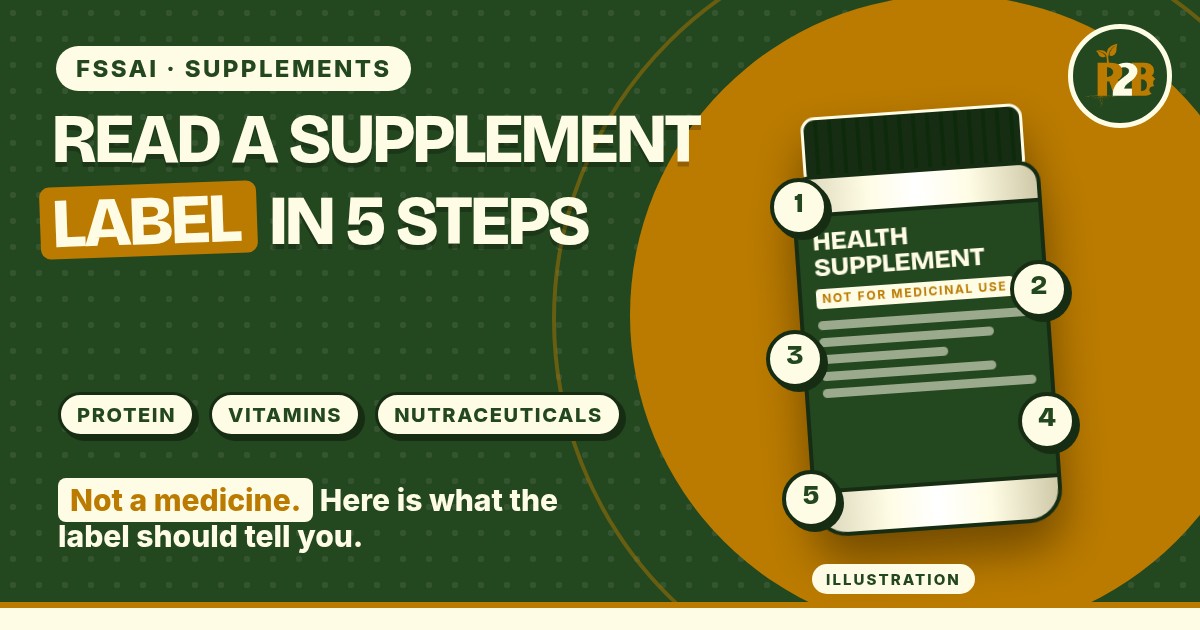
A packaged “high protein” product can be a convenient addition, but it is rarely the only way, or the cheapest way, to get there. If you are looking at protein powders or capsules, see how to read a supplement label in India.
What the claim cannot tell you
- How good the protein is. Protein sources differ in how well the body uses them.
- Whether the rest of the product is healthy. A high-protein chocolate bar can still be high in sugar and fat.
- What you need. The right amount depends on you, not on the pack.
- Whether a batch was tested. A claim is the brand’s own statement. See what a food lab report can and cannot tell you.
We looked at how protein claims on a pack are worked out in our first podcast episode, FUELFLEX x R2B. For the rest of the label, see how to read a packaged food label in India and what the numbers in an ingredient list mean.
Rules and guidelines change. For the latest official wording, see the sources below. This is general information, not medical or legal advice. If you have a health condition, ask your doctor or a registered dietitian.
Frequently asked questions
What does “high protein” mean on a food label in India?
It is a claim covered by FSSAI’s Advertising and Claims Regulations. A product has to contain a defined minimum amount of protein per 100 g to use it, which the compendium sets as a share of the recommended daily intake. Check the protein per 100 g in the nutrition table to see for yourself.
How much protein do I need per day in India?
ICMR-NIN’s 2024 Dietary Guidelines recommend about 0.83 g of protein per kg of body weight per day for a healthy adult, which is roughly 50 g for a 60 kg person. Needs are higher for some groups, so ask a doctor or dietitian about your own.
Do I need protein powder?
ICMR-NIN’s guidelines say healthy people can meet their protein needs from a balanced diet and do not need protein supplements, and they caution against long-term intake of large amounts. If you are considering one for a medical or training reason, ask a doctor or registered dietitian.
How do I calculate protein per 100 g?
Divide the protein in the pack or serving by the weight of the pack or serving, then multiply by 100. For example, 6 g of protein in a 30 g pack is 20 g per 100 g.
Is a “high protein” snack automatically healthy?
No. The claim is only about protein. Check the sugar, salt, saturated fat, calories and ingredient list as well.
Sources
- FSSAI: Compendium of Advertising and Claims regulations
- FSSAI: Direction on operationalisation of the Advertising and Claims regulations (2019)
- ICMR-NIN: Dietary Guidelines for Indians (2024)
General information only, not medical or legal advice. FuelFlex, the brand in our first podcast episode, is Root to Bite’s first partner brand and makes protein powders; it did not review or pay for this article.